A Focused Path for Growth: 10 Insights from Top VMware Individual Contributors
Preserving What Was Lost
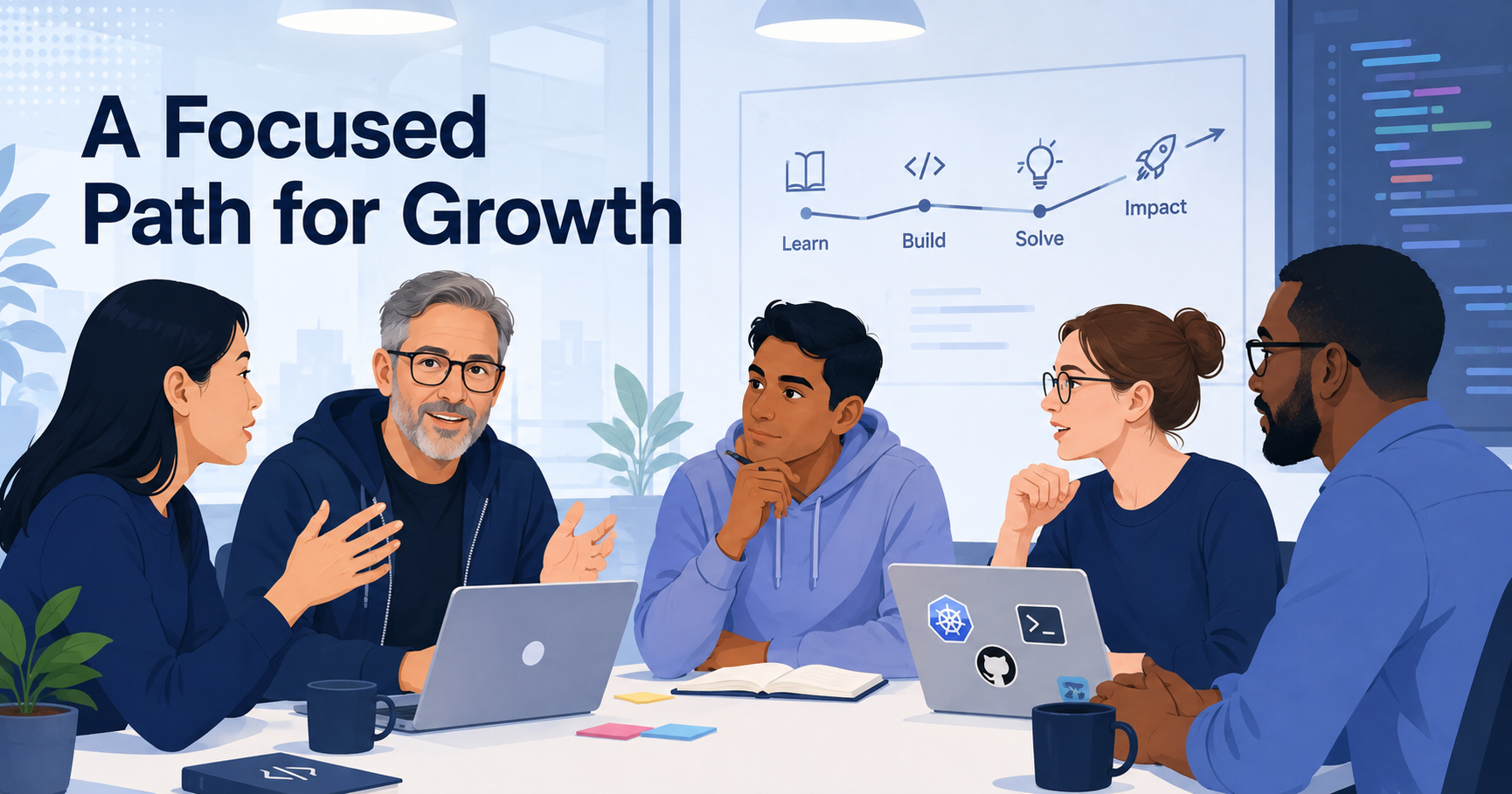
In late 2021, I hosted a call to interview a number of the top individual contributors inside VMware with a single goal - pass along the career advice they had gained from becoming elite-level individual contributors to others. The insights from that discussion were translated into written form with the help of Louise Bunyan and posted on the VMware Careers blog. Since that page no longer exists, I have preserved the final draft here in its original form for the benefit of those who are seeking to progress in their careers and remain individual contributors.
The Individual Contributor’s Career Path
People management isn’t for everyone, but traditionally that was the only way you could progress and move up through the ranks. At VMware, we provide career options both for those looking to pursue leadership and those looking to progress as individual contributors. But when presented with the choice of either staying an individual contributor or moving into a people management role, how do you know which one is the right choice?
As an individual contributor myself and someone with little experience as a manager, it’s something I’ve thought a lot about lately. This prompted me to seek insight from colleagues who have reached elite levels on the individual contributor track at VMware such as senior staff and principal. What follows is a compilation of advice from my colleagues that I hope will provide tips for growth, wherever you are in your career. As you read through what follows, be introspective to see what resonates based on your personal why, skills, traits, and passion.
Take the Good Things from Management
Some choose people leadership because of the desire to open doors and help others reach their full potential. For example, a manager is responsible for performance management, fighting for pay raises, hiring and firing, and building a team culture. Plus, having a seat and a voice at the table to advocate for employees and impact the company strategy in a positive way is another perk of a people leadership role.
Individual contributors might be concerned at not having the same level of influence and voice that a people manager may have. However, an effective individual contributor can still embrace the influential tasks of management through mentoring others, staying close to customers and the technology, leading teams to deliver technical solutions, and delegating - all without the HR hassles. And, these leadership qualities can be developed by individual contributors without requiring a manager role to exercise. As it turns out, leadership and being an individual contributor need not be mutually exclusive.
Ditch the Highlander Mentality
Get past the idea that there’s only one right track for you. If you are currently pursuing the individual contributor path, this does not prevent you from jumping over to management further down the line if interested.
Also, it’s ok to be uncertain about your long-term career plan. Some of the people I interviewed for this piece had management experience in the past and decided it was not for them while others had not completely ruled out management as a future possibility.
There are also those who have pursued management but never landed a role. Such individuals had to look deeper at where they were providing value as an individual contributor (i.e. translating technical complexity and making it simple for people at multiple levels within the company) to select areas of focus for development and progression.
Your personal and professional growth won’t always lead you down a straight path and isn’t solely about climbing a ladder. Let the focus be on being a better you each day.
No One Pushes You to Get Promoted
Your manager has a lot of things to do besides thinking about your promotion. If you decide to walk the path to elite levels of individual contributor, you have to say it’s what you want. As much as possible, maintain a sense of what you want (or do not want) in your career at any given stage, and when the time comes, signal your intent to pursue a specific role or path to your manager. Having that open conversation builds trust in both directions, allowing you to ask for feedback on getting to the next step and who you should have as a mentor to help get there.
Maintain a Defendable Body of Work
The elite roles don’t get handed out like candy because of tenure. Instead, think of what it takes to get there as doing PhD level work or completing a Staff project as mentioned in Will Larson’s book, Staff Engineer. A great question to ask yourself is, “What have I done to contribute to the overall body of knowledge in my field?”
Advancement to these levels depends on a defendable body of work in addition to meeting the requirements of the role. Defendable means it is something that:
- Has been documented
- Stands out
- Has made a substantial impact for others inside (and outside) your organization beyond the requirements of your day job.
In addition, one must demonstrate:
- A history of repeated excellence of being a force multiplier / change agent
- Solving problems that have not been previously solved
- Enabling others internally and externally
- Visibly demonstrate tech for good
- Be globally recognized for the hard work / innovation made
No matter your role, consistent documentation of your accomplishments is important evidence of your work and impact. Keep an archive of valuable comments from others about your character and your work. Make it a habit to take time each week to compile what you have done and categorize it based on impact and outcome.
If you’re like me, maybe you’re wondering what your body of work might be so that you can reach this level? That’s a tough question to answer and is unique to you. But the following points could guide you:
- The work should stretch you to gain new skills in a way that shows your strengths.
- It should fill an identified gap to provide value back to your employer and the greater community.
- It should be something that is interesting to pursue.
- It should be work you decided to do, and not something you were told to do.
Start the Journey of Self-Discovery
The journey to principal requires one to act independently to achieve broader company goals and in ways that exhibit thought leadership. And don’t forget that when you are awarded principal, it means you were already doing the work of someone with that role.
My colleagues who are principals in their field have said that entering into the process was at first overwhelming, but a great place to start was doing a self-assessment against the requirements of the role and identifying gaps. This revealed if their body of work was strong enough to allow them to progress to the next level or if they needed more improvement in a specific area. The assessment exercise also helped highlight and clarify career priorities.
They also said the journey is about learning to advocate for yourself and advertising your abilities and contributions. This was a continuation of personal brand building which began much earlier in their careers as individual contributors. And it’s about becoming part of another group which is amazing and very special.
Accept Good Enough
There’s a difference between getting a job done right and knocking it out of the park, both in the level of effort and what is truly needed to accomplish a task. The perfectionist in all of us is the enemy of complete, the destroyer of our recognition of ‘good enough’. Putting forth more effort than is required takes energy, and we each only have a certain amount of energy from which to pull. How will you use your energy?
Tennis players may choose not to sprint at full speed to attempt a shot if they know it won’t help them get the ball back over the net and in play. They reserve the energy for times when they have a chance to do some damage to the opponent. Recognizing the level of effort needed to do a ‘good enough’ job will help with time management as you take on more responsibilities. Spending a day to prepare for an important meeting might be good enough, whereas spending 3 days to prepare may be overkill.
Focus Your Decision Making
It’s ok to say no to a task. Let impact be the measuring stick for spending your time and energy. If something requires extreme effort but makes little to no impact, consider saying no. If something requires little effort to make a big impact, capitalize on the opportunity to say yes.
Even if you’ve been doing something for a while, evaluate whether it’s time to lay it down in pursuit of greater goals. In saying no, you may be able to provide someone else an opportunity to elevate their level (i.e. passing on leadership of a community group to a suitable replacement). Amplifying others is another way to demonstrate evidence of your impact and thought leadership.
If you really want to do something, you will find the time to do it. Know that it takes time to put together your body of work, and while doing this, other things may have to be de-prioritized. Think about opportunities related to your current work and how you can build on them. Take something you’ve done and figure out a way to repeat it on a bigger level. Consider your passion and excitement levels about the work.
Lack of focus can make you scattered. You can be busy but accomplish very little and may be escaping more important things. Dedicate time to the things which are important to do your job well and build your body of work. Remember not to work so hard that you lose sight of other priorities like family. Leave time in your schedule for self-care, recharging, relationships, and hobbies. Redirect your mind to be present in those non-work hours.
Re-Evaluate Your Career
Periodically, take notice of your happiness and level of satisfaction with what you’re doing. If something isn’t quite right, consider having a conversation with your manager. If the issue seems bigger, ask yourself if you’re looking to have a louder voice or more responsibility. Is your current role limited or not allowing growth? Could it be you are getting frustrated and need some time to recharge and gain clarity?
Moving up the career ladder may require a change in roles. This helps demonstrate growth and expanded responsibilities. If you have a specific goal in mind and need to take a step that will better position you to achieve that goal, don’t be afraid to make that change. The prospect of change plays on our loss aversion. We don’t want to lose what we have if it’s somewhat enjoyable, so we spend less time focusing on what could be good about the change and more time thinking about things we would miss in making the change. We tend to run away from a job rather than toward one.
There are no bad decisions but rather only unintended outcomes. A single decision doesn’t mean there is no way back.
The Role of Mentors
Actively seeking mentors cannot be overstated, regardless of where you want to go. Mentors can be for a reason, a season, or a lifetime. If you’re looking to gain a skill someone else demonstrates at a high level, take the time to learn from that person. There is something they can learn from you as well. It’s ok if a mentoring session happens just once. Perhaps a mentor stays with you for a specific amount of time while some will always be there.
Just like signaling what you want to your manager, signal what you want to a potential mentor. Share what you’d like to work on with them, where you want to be by the end of the time together, and consider how you will measure your own growth in the process.
Raise your hand. Go out and ask. Reach out to anyone you want.
Paint Your Own Canvas
The individual contributor’s path can be what we make it. It may not be a straight line or a look like another person’s path. But to reach elite levels, you have to think about what you want to do with something like a principal role. What is your vision for the work you will do you in this role, the impact you will make, and how does it contribute to the greater good? If you can’t answer these questions right now, perhaps you need to think on it.
The great news is you don’t have to decide right now. No one will force your hand to commit to be an elite individual contributor tomorrow. And if you’re happy and satisfied where you are without a desire for more responsibility, there’s nothing wrong with stopping there. There are opportunities for personal growth in the work you’re doing right now.
Thinking on my own journey and for those who choose to walk the path, the work ahead is valuable, meaningful, filled with growth, and will impact many more than just you. But, there is a significant investment required in terms of time, dedication, and work.
Acknowledgements
I’d like to say a special thanks to the following people for their contributions to this article at the time of its writing:
- Ann Bailey
- Jodi Shely
- Cale Fogel
- Adam Bohle
- Paul McSharry
- Joe Chenevey
- Sean Lambert
- Ryan Clair
- Brad Clemmons
- Mandy Botsko-Wilson
- Amanda Blevins
- Yvette Edwards
- Joseph Griffiths